
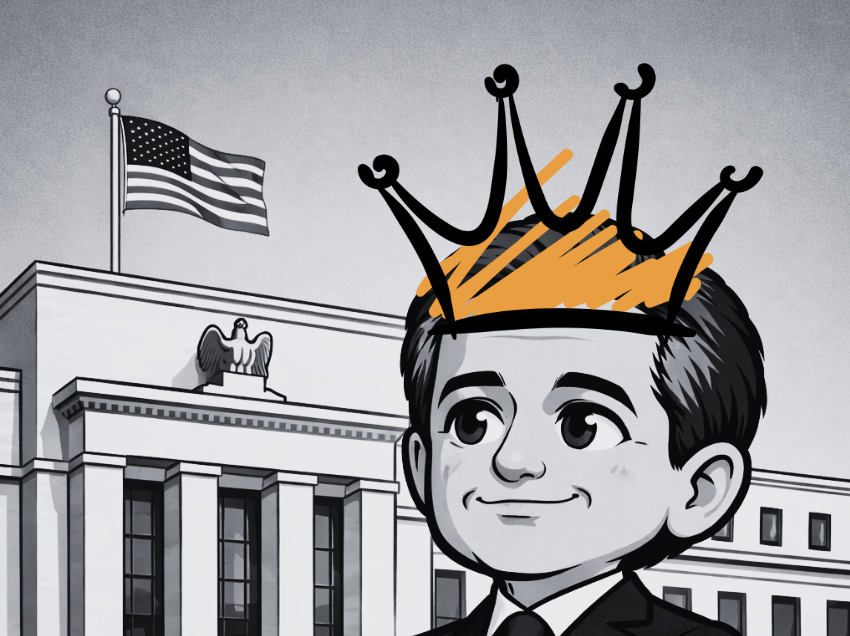
Personal Background, Policy Philosophy, and the Risk of Repoliticizing U.S. Monetary Governance
Executive Summary
The nomination of Kevin Warsh as Chair of the Federal Reserve represents more than a mere change in personnel; it signals the most significant “institutional pivot” for the Fed since the era of Paul Volcker. As an “insider challenger,” Warsh’s core mission is to dismantle the current macroeconomic consensus within the Fed, shifting it from passive “data dependency” toward more forward-looking “guidance-based policy,” while redefining the relationship between the Federal Reserve and the Treasury. This transformation will not only reshape the trajectory of U.S. monetary policy but also exert profound influence on global financial markets and the economic order.
1. Career Trajectory and Power Mapping: The “Chosen One” from Wall Street to the White House
Kevin Warsh’s career path perfectly integrates Wall Street frontline experience, White House policymaking background, and core decision-making tenure at the Federal Reserve, making him a potential Fed Chair with a unique perspective.
1.1 Morgan Stanley and the Crisis Management Gene
Warsh’s investment banking career at Morgan Stanley (1995–2002) focused primarily on Mergers and Acquisitions (M&A), providing him with deep insights into capital market mechanics, the complexities of corporate finance, and the behavior of financial institutions under stress. This experience not only cultivated his keen intuition for market liquidity and financial stability but also provided invaluable practical experience for his later role in addressing the financial crisis at the Fed. Having personally participated in numerous large-scale transactions, he gained a profound understanding of the fragility and interconnectedness of the financial system, laying the foundation for his future emphasis on risk management and market discipline in policymaking.
1.2 Political Baptism in the Bush Era and the Rise at the Fed
During the George W. Bush administration, Warsh served as Special Assistant to the President for Economic Policy (2002–2006). This tenure familiarized him with White House decision-making processes and political considerations, while allowing him to accumulate extensive policy experience. In 2006, at the age of 35, Warsh was nominated by President Bush as a Governor of the Federal Reserve, becoming one of the youngest governors in its history. This appointment not only highlighted his exceptional talent but also reflected the Bush administration’s trust in his economic insight. During the 2008 global financial crisis, Warsh played a pivotal role as the primary liaison between the Fed and Wall Street, coordinating emergency lending programs and participating in the design and implementation of the Troubled Asset Relief Program (TARP). This experience gave him a deep appreciation for the central bank’s core role in crisis management but also prompted him to reflect on the long-term risks of excessive Fed intervention.
1.3 Family Background and Ties to the Republican Establishment
Warsh’s family background adds a unique dimension to his political career, establishing deep connections with the Republican establishment and the Trump administration.
•The Estée Lauder Family: Warsh’s wife, Jane Lauder, is an executive at the Estée Lauder Companies and a billionaire heiress to the Estée Lauder family. The family is a titan of the American business world, with influence extending far beyond the economic sphere into the political arena.
•The Trump Connection: Warsh’s father-in-law, Ronald Lauder, is the Chairman of Clinique Laboratories and an heir to the Estée Lauder fortune. Ronald Lauder is a long-time close friend and significant political donor to Donald Trump, with their relationship dating back to their time at the Wharton School. This deep personal connection has earned Warsh a level of political trust from Trump that transcends traditional technocratic boundaries, giving him a unique advantage in the competition for the Fed Chairmanship. The close ties between the Lauder family and the Republican Party also position Warsh as a key member of the Republican establishment, providing a powerful support network for his political operations in Washington.
2. Evolution of Policy Thought: From “Hawk” to “Realist”
Kevin Warsh’s monetary policy philosophy is not static; it has evolved alongside the economic environment and his personal reflections, moving from an early “hawkish” stance toward a more “realist” perspective.
2.1 Re-examining Historical Stances: Critique of Quantitative Easing
During his tenure as a Fed Governor from 2006 to 2011, Warsh was known for his vigilance regarding inflation risks and his cautious approach to unconventional monetary policy. He famously cast a dissenting vote against the Fed’s second round of quantitative easing (QE2) and repeatedly warned that ultra-low interest rates and large-scale asset purchases could distort markets and damage long-term price stability. He argued that the excessive expansion of the Fed’s balance sheet could not only trigger future inflation but also weaken the market’s own risk-pricing functions, thereby sowing the seeds for the next financial crisis. This experience shaped his critical thinking regarding central bank over-intervention and made him an outspoken critic after leaving the Fed.
2.2 “Inflation is a Choice”: The Emergence of a New Inflation Theory
However, between 2024 and 2025, significant shifts appeared in Warsh’s policy advocacy. He began criticizing the Fed under Jerome Powell for being slow to respond to inflation and, in a November 2025 Wall Street Journal op-ed, proposed the idea that “inflation is a choice.” He argued that the Fed should not rely solely on traditional monetary policy tools but should more actively consider supply-side factors, particularly the role of technological progress and productivity gains in suppressing inflation. He advocated that if productivity continues to grow strongly, the Fed should be more open to rate cuts to avoid unnecessary damage to economic growth caused by excessive tightening. This viewpoint marks his transition from a pure “rate-hike hawk” to a “realist” who emphasizes economic growth potential and supply-side factors.
2.3 The Logic of the Shift: Economic Environment and Strategic Adjustment
Behind Warsh’s shift in stance lies both an adaptation to a changing economic environment and potential strategic considerations regarding political reality. From an economic perspective, he believes that structural changes in the global economy over the past decade—particularly productivity gains driven by the technological revolution (such as AI)—may have altered the effectiveness of traditional inflation models. He advocates for the Fed to re-evaluate the neutral interest rate (R-star) to adapt to new economic realities. From a political perspective, Warsh’s shift may also align with the Trump administration’s preference for low interest rates. By adjusting his policy advocacy, he can better align with potential political appointees while garnering broader political support. He has publicly called for “regime change” at the Fed, criticizing its “credibility deficit” and “mission creep,” indicating his belief that the Fed requires fundamental reform rather than mere policy fine-tuning.
3. Is This “Shift” a Contradiction or an Evolution?
On the surface, moving from the “Hawk King” who resolutely opposed QE in 2011 to the “Chair-designate” advocating for rate cuts in 2026 looks like a “U-turn” to bow to political reality. However, a deep analysis of the underlying logic reveals that this is actually a cognitive evolution based on “supply-side logic.”
3.1 Underlying Unity of Core Logic: From “Anti-Inflation” to “Anti-Distortion”
Warsh has always insisted not on simple “high interest rates,” but on the “authenticity of market pricing.”
•Deep Aversion to QE (2011–Present): Warsh believes QE is essentially the Fed “manipulating” long-term interest rates. When the Fed buys trillions in Treasuries and MBS, it effectively replaces the private market in credit allocation. This leads to inflated asset prices (transferring wealth to the rich, what he calls a “reverse Robin Hood”) and the survival of zombie firms.
•The Subtle Substitution of “Rate Cuts + Balance Sheet Reduction” (2026 Proposal): He views the $7 trillion+ balance sheet as the greatest “pricing noise.”
•His Evolution: He no longer clings to high interest rates but proposes a “surgical switch”—returning pricing power in the Treasury market to private capital through accelerated quantitative tightening (QT) (which naturally pushes up long-term real rates), while lowering the policy rate to reduce financing costs for the real economy (such as SMEs and household consumption).
•Conclusion: His goal is not simple “liquidity injection” but transforming the Fed from a “credit manipulator” back into a “short-term liquidity manager.”
3.2 The “Logical Bridge”: AI Productivity Dividends “Defusing” the Phillips Curve
This is the technical core that allows Warsh to achieve strategic alignment with the Trump administration’s vision of “high growth, low inflation.”
•The “Dead End” of Traditional Models: The Phillips Curve relied upon in the Powell era posits that low unemployment leads to wage growth, which in turn leads to inflation. Therefore, if the economy is too good, rates must rise.
•Warsh’s “1990s Greenspan Moment”: Warsh has argued in the Wall Street Journal and at the Hoover Institution that AI is a supply-side revolution.
•If AI boosts productivity by 2%, then even if wages rise by 4%, the unit output cost for firms is still falling. This means “high growth” is no longer synonymous with “high inflation.”
•Analytical Perspective: He views AI as a “natural deflationary force.” With this theoretical moat, he can legitimately support rate cuts to coordinate with “re-industrialization” while claiming he has not abandoned vigilance against inflation.
3.3 Institutional Reflection: Ending the “Pseudo-Rationality” of “Data Dependency”
Warsh’s criticism of Powell-style “data dependency” is essentially a rejection of the bureaucratic decision-making model.
•Criticizing “Junk Food”: Warsh argues that making decisions based on last month’s non-farm payrolls or CPI data is like driving while looking in the rearview mirror. These data are often heavily revised and reflect the past, not the future.
•Advocating “Rule-Based” Governance: He believes the Fed should establish a more transparent and predictable “rule-based” framework, rather than having the market hold its breath every month for the Chair’s hints.
•New Interpretation of Independence: True independence is not “opposing the government,” but “not being hijacked by short-term market sentiment.” By abolishing “forward guidance,” he seeks to allow the market to regain its self-regulatory capacity rather than constantly waiting for the Fed’s “milk” like a giant infant.
4. The Paradox of Independence and Continuity: Powell vs. Warsh
A change in the Fed Chairmanship often brings discussions about policy continuity and independence. Warsh’s arrival will undoubtedly pose a severe challenge to the policy framework and institutional culture of the Jerome Powell era.
4.1 The Myth of Policy Continuity
It has long been a common belief that a Fed Chair will continue the policies of their predecessor to ensure the stability and predictability of monetary policy. However, history does not always support this. Paul Volcker, upon taking office in 1979, completely reversed the loose policies of G. William Miller, adopting aggressive tightening measures to curb high inflation. Similarly, although Alan Greenspan took office after Volcker, his policy style and attitude toward financial innovation differed significantly. These cases demonstrate that a Fed Chair’s personal philosophy and economic outlook often transcend so-called “policy continuity,” especially when facing major economic challenges or political pressure.
4.2 Paradigm Conflict: Powell vs. Warsh
Powell is seen as a pragmatic, consensus-oriented leader who tends to rely on the collective wisdom of the Fed’s vast team of Ph.D. economists. His decision-making process is typically incremental, aimed at building broad internal consensus. In contrast, Warsh is a “vision-driven” leader who advocates for “regime change” at the Fed, challenging existing dogmas and bureaucracy. He believes the Fed’s “credibility deficit” stems from its misjudgment of inflation and excessive market intervention. This conflict between “consensus-driven” and “vision-driven” leadership suggests a significant policy pivot within the Fed once Warsh takes office.
•Redefining Independence: Warsh once called for a “partnership” between the Fed and the Treasury, raising concerns about Fed independence. In the “Great Fiscal Era,” government spending plays an increasingly important role in the economy, making coordination between the Fed and the Treasury vital. However, where is the boundary of this “partnership”? Will it blur the lines between monetary and fiscal policy, making the Fed more susceptible to political pressure? Warsh’s view may imply a redefinition of Fed independence—from absolute political detachment toward policy coordination within a specific framework.
4.3 Institutional Culture Shock: Legal Background vs. Economics Background
Both Powell and Warsh have legal backgrounds (J.D.) rather than traditional Ph.D.s in economics. This makes them somewhat “outliers” within the Fed’s massive Ph.D. economist community. During his tenure, Powell, despite lacking an economics Ph.D., demonstrated respect for and reliance on professional economists. Warsh, however, may adopt a different strategy. He has criticized the “dogmatic” tendencies within the Fed and argued for the need to “shake up” its institutional culture. His legal background may lead him to focus more on rules, procedures, and market mechanisms rather than pure economic models. This cultural shock could lead to changes in the power structure and decision-making processes within the Fed, challenging the long-standing dominance of Ph.D. economists.
5. In-Depth Analysis and Path Prediction of Warsh’s Policy Advocacy
Kevin Warsh’s policy advocacy—particularly his views on the balance sheet, interest rate policy, and inflation theory—suggests a potentially aggressive and innovative monetary policy path for the Fed.
5.1 Aggressive Path for Quantitative Tightening (QT)
Warsh has long criticized the massive assets held by the Fed following the financial crisis, arguing that they distort market functions and sow the seeds for future inflation. He advocates for the Fed to significantly shrink its balance sheet to return it to more normal levels. If Warsh takes office, he may adopt a more aggressive QT policy than that of the Powell era. This would mean the Fed selling its holdings of Treasuries and Mortgage-Backed Securities (MBS) more rapidly, thereby reducing market liquidity. This aggressive path could have a significant impact on the housing and Treasury markets:
•Housing Market: The sale of MBS will directly affect mortgage rates, potentially leading to higher borrowing costs and putting pressure on the real estate market.
•Treasury Market: Large-scale sales of Treasuries will increase the supply in the market, potentially pushing up long-term yields and increasing government financing costs.
5.2 A New Framework for Interest Rate Policy
Warsh’s stance on interest rate policy, particularly his “inflation is a choice” theory, suggests a new framework for rate decision-making.
•Arguments: Warsh believes that productivity gains driven by technological progress (such as AI) in the current economy may have increased the economy’s potential growth rate and lowered the level of the neutral interest rate (R-star). This means that even at lower interest rate levels, the economy may not experience overheating or inflation. He views productivity gains as a “free lunch” in the fight against inflation and advocates for the Fed to more actively leverage this advantage by maintaining relatively low rates to stimulate growth.
•Direction of Development: Warsh may adopt a “rate cut + balance sheet reduction” combination. On one hand, he may be more inclined to cut rates to support growth once inflation is under control; on the other hand, he will continue to push for shrinking the balance sheet to correct what he perceives as market distortions. This unprecedented policy mix will have complex effects on global liquidity: in the short term, rate cuts may release liquidity, but in the long term, aggressive balance sheet reduction will tighten global financial conditions. This policy uncertainty could lead to increased market volatility and impact emerging market economies.
5.3 Extended Discussion: Global Central Bank Follower Effect and Market Volatility Re-evaluation
•Global Central Bank Follower Effect: Will Warsh’s “regime change” and new monetary policy framework trigger a chain reaction among other major global central banks, such as the ECB and the BOJ? If the Fed adopts a “rate cut + balance sheet reduction” mix, will other central banks follow suit, leading to a synchronized shift in global monetary policy? This would have profound implications for global capital flows, exchange rates, and international financial stability.
•Re-evaluation of Market Volatility: Warsh’s different understanding of transparency—namely, that he might reduce the Fed’s excessive communication to avoid market over-interpretation of every policy statement—could reduce short-term noise but also increase “tail risk.” In critical moments, the market might overreact to policy changes due to insufficient information, triggering greater volatility. Markets will have to re-evaluate the Fed’s communication strategy and policy intent, potentially leading to a rise in risk premiums.
6. Conclusion and Risk Warnings
Kevin Warsh’s leadership of the Federal Reserve will undoubtedly usher in a new era of transformation and uncertainty. His appointment brings both opportunities to break deadlocks and drive reform, as well as significant political and market risks.
6.1 Political Risk
Warsh’s Senate confirmation process may not be smooth. Republicans like Senator Thom Tillis have clearly stated they will block any Fed nominations until the results of the investigation into the Fed’s Washington headquarters renovation project are released. Furthermore, Warsh’s “honeymoon period” with Trump may not last. Trump is known for his volatility regarding Fed Chairs; if Warsh’s policies fail to meet Trump’s expectations (e.g., if rate cuts are not fast enough), he could face public criticism and political pressure from the White House. Such political interference would further challenge the Fed’s independence and potentially damage its long-term credibility.
6.2 Market Risk
The “rate cut + balance sheet reduction” combination that Warsh might adopt is an unprecedented monetary policy experiment. This aggressive policy pivot could lead to severe shocks in financial markets. Markets may struggle to adapt to the Fed’s new communication strategy and policy intent, triggering excessive volatility in asset prices. Moreover, if the balance sheet reduction is too rapid, it could lead to tight market liquidity or even trigger new financial risks. Global investors will closely monitor every policy signal from Warsh to assess its impact on global capital flows and asset allocation.
6.3 Historical Evaluation: Savior or Catalyst?
Ultimately, the historical evaluation of Kevin Warsh will depend on whether he can successfully navigate current economic challenges and drive institutional reform while maintaining Fed independence. Can he establish a new, more effective policy framework while breaking the old consensus? Can he uphold the central bank’s responsibilities to maintain price and financial stability under political pressure? Whether Warsh is the savior of the Fed, rescuing it from a “credibility deficit,” or the catalyst pushing it toward politicization and uncertainty, will be the final judgment of history.
 English
  Malay
Malay