
Executive Summary
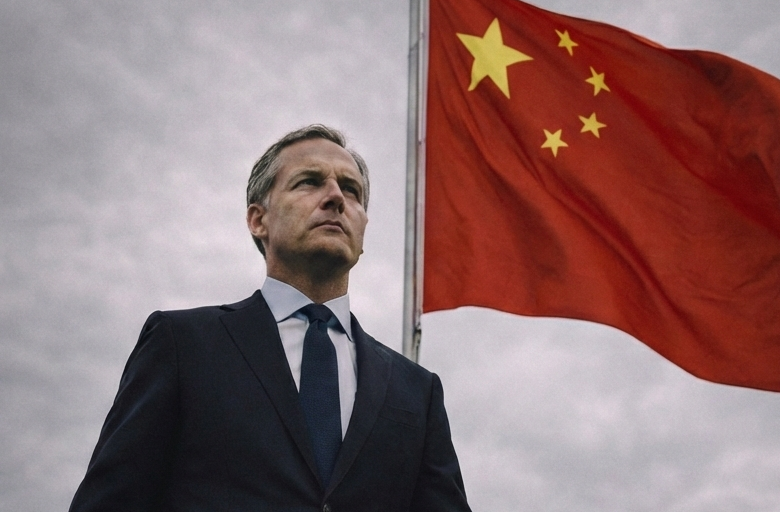
On January 16, 2026, Canadian Prime Minister Mark Carney conducted an official visit to China, marking the first visit by a Canadian leader since 2017. During the summit in Beijing, a series of landmark trade agreements were signed, signaling a strategic thaw in bilateral relations after years of “deep freeze.” This visit represents a significant recalibration of Canada’s foreign and economic policy, as Ottawa seeks to mitigate its over-reliance on a single market and expand economic diversification through multi-sectoral cooperation.
Against the backdrop of the Trump administration’s threat of a 25% universal tariff and the upcoming 2026 mandatory review of the United States-Mexico-Canada Agreement (USMCA), the Carney government has adopted a pragmatic “hedging” strategy. Key outcomes include the reduction of tariffs on Chinese electric vehicles (EVs), reciprocal tariff cuts on Canadian agricultural products, the restoration of visa-free travel, and the reactivation of high-level dialogue mechanisms, including the signing of the Canada-China Economic and Trade Cooperation Roadmap.
While the visit underscores Canada’s intent for strategic autonomy, it faces significant domestic industrial and political resistance. Furthermore, the agreements touch upon sensitive provisions within the USMCA and the broader North American alliance, prompting a dual-track response from Washington characterized by public concern and private pressure.
1. Background: Strategic Thaw and Carney’s Realism
1.1 Diplomatic Context and Inflection Points
Over the past eight years, Canada-China relations have experienced profound volatility. The 2018 arrest of Huawei CFO Meng Wanzhou in response to U.S.-China tensions, followed by the detention of two Canadian citizens in China, drove bilateral ties to a historic low. High-level exchanges remained stagnant for years. Following the 2025 change in government, Canada sought to reset relations through diplomatic engagement and pragmatic dialogue, laying the groundwork for Carney’s 2026 visit.
1.2 Aftershocks of the Trade War
Between 2024 and 2025, relations were deadlocked over EV tariffs. Canada had initially followed the U.S. lead by imposing a 100% surtax on Chinese EVs. Beijing retaliated with punitive tariffs—some as high as 85%—on Canadian canola, pork, and peas. By 2025, Canadian canola exports to China had plummeted by over 50%, placing immense economic strain on the agricultural provinces.
1.3 The “Trump Pressure Test”
The return of Donald Trump to the White House, accompanied by a resurgence of “Monroe Doctrine” rhetoric and the threat of a 25% universal tariff on Canadian goods, highlighted Ottawa’s vulnerability to U.S. market fluctuations. During his visit, Prime Minister Carney stated that Canada must deal with “the world as it is, not as we wish it to be.” This realist pivot aims to leverage strengthened economic ties with China as a bargaining chip in future USMCA negotiations.
2. Core Content Analysis: Precise Interest Exchange
The agreements reached are not a comprehensive Free Trade Agreement (FTA) but rather a series of highly targeted sectoral access arrangements:
2.1 The EV “Quota System” Breakthrough
Canada has agreed to permit an annual quota of up to 49,000 Chinese-manufactured EVs, expanding to 70,000 over the next five years. These vehicles will be subject to a 6.1% Most-Favored-Nation (MFN) tariff rate, replacing the previous 100% punitive surtax. This effectively restores tariffs to pre-2023 levels, easing supply chain costs and consumer prices. Ottawa aims to satisfy domestic demand for affordable clean energy vehicles while incentivizing Chinese battery technology and supply chain investment within Canada.
Context: In October 2024, Canada aligned with the U.S. and EU by imposing a 100% surtax on Chinese EVs (totaling 106.1% with the MFN rate) to prevent “dumping” and protect the nascent domestic EV supply chain. This move had effectively forced brands like BYD, Zeekr, and China-made Teslas out of the Canadian market.
2.2 Agricultural Trade “Amnesty”
In exchange for the EV quotas, Beijing agreed to reduce the composite tariff on Canadian canola from 85% to approximately 15% by March 1, 2026. Furthermore, China pledged to suspend anti-discriminatory tariffs on Canadian canola meal, lobster, crab, and peas. This move is expected to unlock approximately CAD 3 billion in export potential, providing a critical lifeline to Western Canadian farmers and stabilizing Carney’s political base in the Prairies.
Context: Retaliatory measures in 2025 had seen China impose 100% temporary tariffs on canola oil and peas, and 25% on pork and seafood. By August 2025, anti-dumping investigations had effectively halted canola exports, causing severe losses for Canadian growers.
3. Legal Red Lines: The Challenge of USMCA Article 32.10
The primary external obstacle to these agreements is the “Poison Pill” clause of the USMCA, designed as a firewall against Chinese economic influence in North America.
3.1 The Logic of the “Poison Pill”: Asymmetric Constraints
Article 32.10 grants the U.S. a de facto veto over the trade policies of its partners. It requires USMCA members to notify others three months before starting trade talks with a “non-market economy.” If an agreement is signed, other members can terminate the USMCA with six months’ notice.
•Targeted Intent: While the language is neutral, the U.S. Department of Commerce’s classification of China as a non-market economy makes this clause specifically applicable to Beijing.
•Deterrence Mechanism: Unlike typical trade disputes settled via compensation, Article 32.10 threatens the “expulsion” of the offending party, potentially stripping Canada of duty-free access to its largest market.
3.2 Canada’s Defense: Exploiting the “FTA” Definition
The Carney government’s legal defense rests on the strict definition of an FTA under international law.
•”Salami Slicing” Strategy: Under WTO GATT Article 24, a true FTA must cover “substantially all the trade.”
•Sectoral MOUs: Canada argues that the January 2026 agreements are merely “Sectoral Memoranda of Understanding” and do not constitute a comprehensive FTA. Therefore, Ottawa maintains that it has not triggered Article 32.10.
•Bypassing Procedures: MOUs are typically executive agreements that do not require the complex parliamentary ratification necessary for FTAs, partially shielding them from formal USMCA review triggers.
3.3 Washington’s Counter-Argument: The WTO “Double-Edged Sword”
U.S. legal experts argue that Canada’s semantic maneuvering is flawed:
•WTO Prohibitions: Ironically, WTO rules prohibit members from granting discriminatory tariff preferences to specific products without a comprehensive FTA (the MFN principle).
•The Inference: If Canada grants a lower tariff quota to China without an FTA, it violates WTO rules. The U.S. can use this to accuse Canada of undermining the international rules-based order.
•Substance Over Form: The U.S. maintains that the agreement should be judged by its effect. If China gains FTA-like market access, Washington may unilaterally declare a breach of the USMCA.
4. Washington’s Response: Trump’s Indifference vs. Establishment Warnings
4.1 Trump’s “Tactical Indifference”
President Trump appeared dismissive of the visit, stating at a press conference: “It’s OK. That’s what he [Carney] should do. If you can make a deal with China, you should do it.” This stance likely stems from:
•USMCA Leverage: Trump may view Canada’s move as a justification for demanding more concessions during the 2026 review.
•Transactional Diplomacy: Trump is focused on forcing Chinese firms to build factories in the U.S. He may see Carney’s deal as a byproduct of U.S. tariff pressure forcing Canada to find alternatives, fitting his “America First” narrative.
•Energy Priority: Trump remains more concerned with Canadian oil supplies than the nuances of the EV market.
4.2 Administrative Warnings: Security and Supply Chain Risks
In contrast to the President, senior administrative officials have issued stern warnings:
•USTR: Trade Representative Jamieson Greer called the deal “problematic,” warning that Canada might “regret” allowing Chinese EVs into its market and emphasizing the need to protect North American auto workers.
•DOT & Commerce: Secretary of Transportation Sean Duffy argued the deal “threatens the security of the North American auto supply chain,” fearing Chinese EVs could serve as a “backdoor” for Chinese software and components into the integrated North American market.
5. Domestic Dynamics: Support vs. Opposition
5.1 Proponents: Agriculture and Clean Energy
Farmers in Saskatchewan and Manitoba, desperate for market access, have offered full support. Lobby groups like the Canola Council view the deal as a “lifeline.” Additionally, environmental groups see affordable EVs as essential for Canada’s emission targets.
5.2 Opponents: Unions and Conservatives
Ontario Premier Doug Ford and auto unions (Unifor) are fiercely opposed, viewing the 6.1% tariff as a “betrayal” of domestic workers that will undermine the local EV supply chain. The Conservative Party has criticized the government for “bowing to Beijing” and jeopardizing the relationship with the United States.
6. Potential Risks: A Fragile Balance
•USMCA 2026 Review Risk: 2026 is the critical review year. If the U.S. determines that Canada’s EV policy compromises supply chain integrity, it may use this as leverage to demand restrictive clauses or even refuse to renew the agreement, forcing Canada into a binary choice between China and North America.
•Weaponization of Trade: Should friction arise in other sensitive areas (e.g., Foreign Agent Registry, South China Sea), Beijing could easily revoke agricultural concessions, leaving the Carney government vulnerable to domestic backlash.
•Security Interference: While the deal encourages investment, the Canadian Security Intelligence Service (CSIS) and opposition parties will likely subject every Chinese investment in critical minerals or tech to rigorous “National Security Reviews,” potentially stalling actual implementation.
7. Potential Opportunities: Strategic Pivot Amidst Crisis
If successfully implemented, the agreement could provide Canada with significant strategic assets:
•Strategic Autonomy: By diversifying trade, Canada reduces its vulnerability to U.S. universal tariffs, a core tenet of Carney’s “real-world” diplomacy.
•Climate Goals: Affordable Chinese EVs (especially in the sub-$35,000 market) could ease inflation and help meet the 2035 zero-emission vehicle mandate.
•”Market for Industry” Strategy: The 49,000-unit quota serves as bait to attract Chinese joint ventures to Canada, potentially bypassing “supply chain security” allegations while leveraging Chinese tech to build a domestic battery industry.
Conclusion
Prime Minister Carney’s visit to China marks a substantive shift in Canada’s diplomatic and economic trajectory. Under the pressure of a shifting global trade system and geopolitical tensions, Canada is attempting to enhance its economic resilience through multilateralism and diversification. While the agreements offer clear economic opportunities, their execution will be challenged by domestic industrial resistance, USMCA constraints, and policy misalignment with the United States.
Ultimately, this visit is not merely a “reset” of Canada-China relations, but a strategic repositioning within the broader context of U.S.-China decoupling and global supply chain restructuring.
 English
  Malay
Malay