
Geoeconomic Weaponization and the Strategic Roadmap for Iranian Regime Transition
Executive Summary
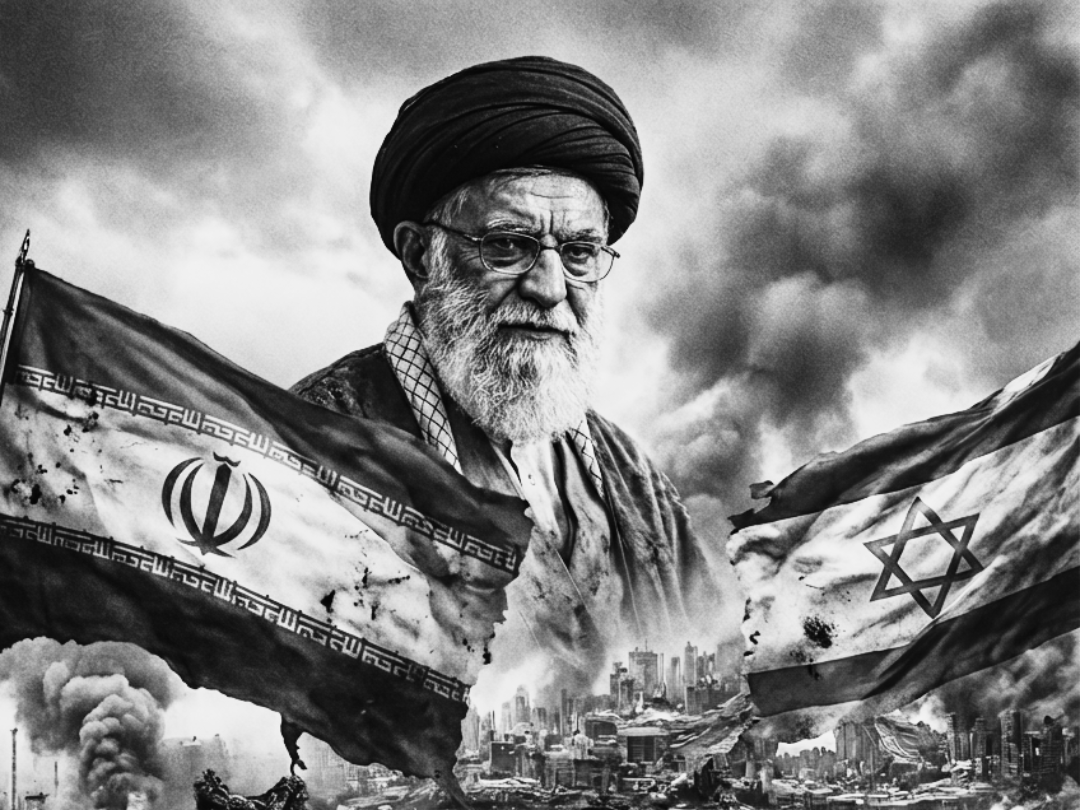
January 13, 2026, is regarded as a “strategic watershed” in Middle Eastern geopolitics. On this day, U.S. President Donald Trump not only transformed Iran’s domestic issues into a global economic and trade survival choice through a “25% tariff,” but also signaled a shift in the nature of U.S. military involvement from “defensive deterrence” to “proactive intervention” by publicly declaring “Help is on its way.” The National Security Council (NSC) meeting held at the White House on January 13 discussed Iran’s crackdown on protesters as potentially constituting “crimes against humanity,” paving the way for the legitimacy of international action. Currently, the Iranian regime is facing its most severe “triple crisis” since the 1973 Islamic Revolution: internal strife (nationwide violent unrest), external threats (a joint U.S.-Israeli military strike list), and suffocation (global secondary trade blockade). This report aims to analyze the strategic logic following the White House NSC meeting on January 13 and provide a multi-scenario assessment of the future situation.
1. Background Update: The “Perfect Storm” of January 2026
Economic Deadlock and the Dissolution of the Social Contract
Entering January 2026, the Iranian Rial (Rial) experienced a devastating collapse, with the unofficial market exchange rate falling to 1.47 million Rials per 1 USD. Inflation soared above 50%, leading to a shortage of basic living materials. Private transactions were forced underground, and bartering even spread among the populace. This economic suffocation directly led to the dissolution of the social contract; the government is no longer able to maintain the loyalty of the grassroots through the distribution of resources. Consequently, protests have shifted from economic demands to institutional rejection.
Escalation of Suppression and Human Rights Crisis
According to the latest data from the human rights organization HRANA, the protests that broke out in late December 2025 have resulted in at least 2,403 deaths among protesters, with some Western media estimating the death toll could be as high as 20,000. The Revolutionary Guard (IRGC) has deployed special forces into major cities such as Tehran, Isfahan, and Shiraz, marking the evolution of the situation into a quasi-civil war state.
2. 25% Tariff: A New Weapon of Geoeconomics
The essence of the tariff lies in punishing third parties rather than Iran itself. Unlike traditional sanctions, the true target of the 25% tariff is not the Iranian economy, but third countries that maintain economic and trade ties with Iran. This is an institutional innovation that embeds the logic of sanctions into the global trade system. The policy requires that any country doing business with Iran will immediately face an additional 25% tariff on its exports to the United States. The direct bearers of the tariff are not Iran, but the third-party countries maintaining economic ties with Iran. This transforms sanctions from a mere diplomatic tool into a “ticket system” for global trade access, forcing Iran’s major trading partners to make a “survival choice” within 48 hours.
1. China: Approximately 26% of Iran’s foreign trade; core risks lie in energy and financial settlement.
As Iran’s largest trading partner (accounting for about 26%), China faces the most complex strategic game.
•Structural Risks of Energy Dependence: Data for 2025 shows that China imported about 80% of Iran’s exported crude oil, with a daily import volume of approximately 1.38 million barrels. Although China possesses a strategic petroleum reserve of about 1.2 to 1.4 billion barrels, sufficient to handle short-term fluctuations, the long-term loss of Iran as a stable “non-dollar settlement” supply source will have a profound impact on China’s energy security strategy.
•”Islandization” of Financial Settlement: The independent settlement system established by China through institutions like the Bank of Kunlun faces the risk of failure in the face of the 25% tariff. If China continues to maintain this system, its hundreds of billions of dollars in annual exports to the U.S. will face a devastating blow, effectively placing the “Petro-Yuan” testing ground on the front lines of the U.S.-China trade war.
2. UAE: Transshipment and financial hub; facing dual pressure of compliance and reputation.
The UAE (especially Dubai) has long been Iran’s most important transshipment trade center and offshore financial window.
•Dual Strangulation of Compliance and Reputation: The 25% tariff directly targets the UAE’s function as a “transit station.” The UAE government has publicly admitted that the policy will have a significant impact on the supply of commodities, including food.
•Acceleration of Financial Decoupling: To protect its status as a global financial center, the UAE faces immense pressure to completely cut off informal financial dealings with Iran within 48 hours. This “compliance pressure” is not only economic but also political, forcing the UAE to realign itself between regional security and economic interests.
3. India: Energy security directly conflicts with U.S. market access.
India’s relationship with Iran has fallen into an unprecedented deadlock in 2026.
•The Strategic Paradox of Chabahar Port: The Chabahar Port, in which India invested, was originally its strategic corridor to Central Asia bypassing Pakistan. However, under the 25% tariff, the operation of the port could be classified as “doing business with Iran,” thereby threatening India’s exports to the U.S.
•Absolute Priority of Market Access: Despite India’s high demand for energy security, its trade volume with the U.S. far exceeds its trade with Iran (trade with Iran in the 2024-25 fiscal year was only $1.68 billion). Therefore, India’s choice within 48 hours is almost certain: sacrifice the relationship with Iran to preserve U.S. market access. This “asymmetric dependence” leaves India with almost no room to maneuver against Trump’s tariff stick.
3. U.S. “Action Plan 2026”
According to information leaked from the secret White House National Security Council (NSC) meeting on January 13, the U.S. action path is clear:
3.1 Technical Intervention: Destroying the “Digital Iron Curtain”
The U.S. is planning to large-scale airdrop or smuggle Starlink terminals into Iran. This move aims to destroy the “National Information Network” (NIN) that the Iranian government relies on, ensuring that protesters can maintain organizational capabilities and real-time communication with the outside world even under a total internet blackout, causing the regime to lose its monopoly over information flow.
3.2 Military List: Paralysis and Surgical Strikes
•Cyber Attacks:
Implement deep paralysis of the Revolutionary Guard’s (IRGC) financial settlement systems and command and communication networks.
•Surgical Strikes:
A “strike list” has been drafted targeting nuclear R&D nodes, missile bases, and IRGC command centers. Trump warned that any retaliation against U.S. or Israeli targets would trigger an “unprecedented” strike.
3.3 Internal “War and Peace” Divergence in the White House
According to reports from media such as the Wall Street Journal after the 13th, there are divergences in strategy within the White House:
Hardliners (led by Rubio): Advocate for using Iran’s current extreme weakness (aftershocks from the 2025 defeat) to directly facilitate regime change.
Pragmatists (led by Vice President Vance): Are attempting to “brake” Trump, fearing that direct military strikes would lead the U.S. back into the Middle East quagmire. They advocate for prioritizing diplomatic pressure and economic tariffs to achieve strategic goals by making Iran completely “Venezuelanized” rather than direct occupation.
3.4 Evacuation and the “Donroe Doctrine”
Historical experience shows that large-scale evacuation is almost always a necessary step before military action. The emergency evacuation order on January 13 is seen as a clear signal of “pre-war mobilization.” U.S., British, and even some European diplomatic personnel are simultaneously evacuating non-core personnel from the Al Udeid Air Base in Qatar, suggesting that the scale of the strike may exceed national borders and involve the simultaneous liquidation of Iran’s overseas proxies (such as the Houthis and Syrian militias). The successful template used by the U.S. after the Maduro incident in Venezuela (i.e., through precision strikes + economic suffocation + supporting exiled forces) is being cloned in Iran. This strategy, known as the “Donroe Doctrine,” aims to achieve low-cost regime change.
4. Global Energy and Geopolitical Game Assessment
4.1 Hormuz Strait Stress Test
Iranian hardliners have threatened to block the Strait of Hormuz. Simulations show that if a “suicide drone swarm” blockade occurs, global oil prices could surge to the $95-$125 range in the short term. Currently, the Pentagon has dispatched a carrier strike group to the Middle East to counter such risks.
4.2 Transformation of the Sunni Stance
Saudi Arabia and the UAE are currently maintaining “tactical silence.” On one hand, they are pleased to see the Iranian regime weakened; on the other hand, they are secretly preparing “alternative capacity” to ensure the stability of the global market when Iranian oil exports drop to zero, in exchange for long-term U.S. commitments to regional security.
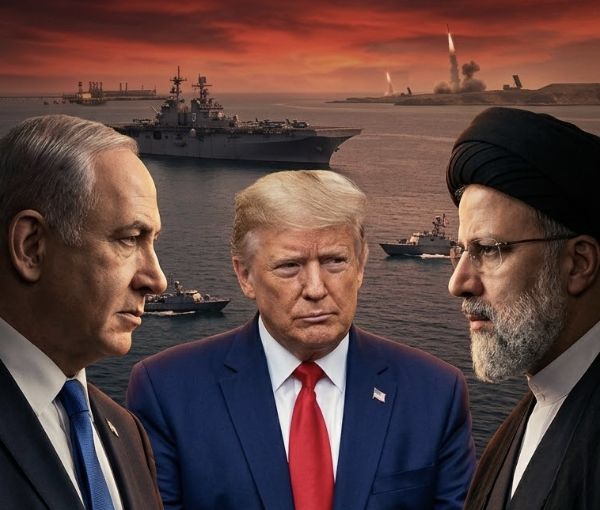
4.3 U.S.-Israeli Coordination: Military and Intelligence Details of the “Mar-a-Lago Agreement”
On December 29, 2025, Netanyahu reached an informal agreement with Trump at Mar-a-Lago, codenamed “Settlement 26.” Details obtained by think tanks are as follows:
•Real-time Intelligence Link:
The U.S. has committed to directly connecting real-time data obtained from its “Sentinel” class high-altitude reconnaissance aircraft and low-orbit satellite constellations over the Persian Gulf to the Israel Defense Forces (IDF) command system. The focus is on monitoring the deployment of mobile missile launchers within Iran and the movement of IRGC ground forces.
•”Red Line Strike” Commitment:
Trump explicitly stated that if Iran attempts to repair nuclear enrichment nodes damaged in the 2025 “12-Day War” (such as the Natanz deep facilities), the U.S. will “absolutely support” Israel’s “surgical strikes,” and even does not rule out direct cooperation from U.S. long-range bombers.
•Cyber Warfare “Blue Chips”:
Both sides agreed to activate “Plan Disconnect” during the peak of the unrest—using electronic warfare to jam the Iranian military’s command links while ensuring that civilians can access specific websites through designated satellite signals (such as Starlink).
5. Political Variables: Reconstructing the Legitimacy of Exiled Forces
Exiled Crown Prince Reza Pahlavi is transitioning from a “political guide” to a “substantial leader.” In January 2026, the performance of exiled Crown Prince Reza Pahlavi marked a new stage for opposition forces.
“January 8 Expedition”: The “National General Mobilization” launched by Pahlavi via social media on January 8 received an unexpected response. In cities like Tehran and Tabriz, protesters burned national flags on a large scale, replaced them with the former regime’s “Lion and Sun” flag, and shouted “Reza Khan, may your soul rest in peace,” showing that the populace has come to see Pahlavi as the only organized alternative.
Shadow Government Prototype (Transitional Council): Think tanks have observed that Pahlavi’s team is secretly contacting several former high-ranking Iranian officials in exile, labor union leaders, and Kurdish parties (such as the KDPI) to attempt to form a “Transitional Council.”
Legitimacy Assessment:
•Advantages: He possesses the highest international visibility and received an indirect endorsement from Trump after January 13 (“Help is on its way”).
•Disadvantages: Left-wing forces and the older generation of revolutionaries within Iran still have doubts about his family’s rule. Currently, his legitimacy comes more from the public’s “extreme loathing” of the current regime rather than a comprehensive identification with his royal status.
6. Scenario Analysis
Scenario 1: Venezuela Model (High Probability) — Structural Suffocation and Spontaneous Regime Collapse
The core logic of this scenario is to use “asymmetric pressure” to induce systemic failure within the regime rather than through a large-scale military invasion.
•Path Evolution:
•Economic Extreme: The 25% tariff cuts off Iran’s legal trade chains with countries like China and the UAE within 48 hours, causing the Rial exchange rate to fall below 1:1.5 million. The government, due to the exhaustion of foreign exchange reserves, is unable to pay the salaries of the IRGC and Basij militia.
•Communication Empowerment: Large-scale airdropped Starlink terminals completely dismantle the digital iron curtain. Protesters share the deployment positions of the IRGC in real-time through encrypted channels, leading to a significant decrease in the efficiency of suppression actions.
•Collapse of the Psychological Defense Line: Trump’s “Help is on its way” and the successful template of the Maduro incident create a strong psychological suggestion, inducing large-scale defections among middle and lower-level IRGC officers.
•Result Assessment:
•The regime collapses spontaneously due to the loss of suppression tools.
•The U.S. quickly recognizes the “Transitional Council” led by Reza Pahlavi, achieving a smooth trusteeship of power through the return of exiled forces.
•Risk Point: The power vacuum period may lead to armed separatism in local areas.
Scenario 2: Surgical Strikes (Medium Probability) — Retaliation Cycle and Military Paralysis
This scenario assumes that Iranian hardliners choose “war to promote peace” in desperation, only to trigger a pre-set list of devastating strikes by the U.S. military.
•Path Evolution:
•Trigger Point: Iranian proxies or the IRGC launch a medium-scale missile attack on a U.S. base in Iraq or Israeli territory.
•U.S. Response: Triggers surgical strikes in “Action Plan 2026.” The U.S. military uses B-2 stealth bombers carrying “Massive Ordnance Penetrators” (MOP) to destroy deep-buried nuclear facilities such as Fordow.
•Command Paralysis: Simultaneously launched large-scale cyber attacks paralyze the IRGC’s financial settlement and command networks, making it impossible to coordinate a nationwide counterattack.
•Result Assessment:
•Core military assets are destroyed, and the regime loses both its external deterrence and internal suppression capabilities.
•Protesters occupy core government institutions in Tehran during the window of military paralysis.
•Risk Point: Accidental strikes on civilian targets may trigger a nationalist backlash, delaying the regime change process.
Scenario 3: Hormuz Crisis (Low Probability/High Impact) — Energy Suicide and Global Conflict
This is the “ultimate card” of the Iranian hardliners, aimed at exchanging survival space through the mutual destruction of the global economy.
•Path Evolution:
•Blockade Action: Iran uses suicide drone swarms, sea mines, and shore-based missiles to block the Strait of Hormuz, attempting to cut off 20% of the global oil supply.
•Market Shock: Global oil prices break $120 within hours and surge toward $150. Global stock markets experience panic selling due to energy inflation expectations.
•Total War: The U.S. and its allies launch “Freedom of Navigation” operations, evolving into saturated strikes against military targets throughout Iran.
•Result Assessment:
•The Iranian regime is completely destroyed in a total war.
•The global economy faces a severe recession risk, and U.S.-China and U.S.-EU relations become extremely tense due to the energy crisis.
•Risk Point: The conflict may spill over into the entire Middle East, triggering a larger-scale regional war.
Scenario 4: Ultimate Negotiation (Variable) — Internal Coup and Strategic Compromise
This scenario belongs to the “Black Swan” variable, where rationalists within the regime save themselves through extreme means.
•Path Evolution:
•Internal Purge: At the last moment before the U.S. strike is launched, moderates within the Iranian military (Artesh) or the IRGC launch a coup, purging the hardliners around Khamenei.
•Secret Contact: The new regime sends a peace signal to the White House through a third party (such as Oman or Switzerland), expressing willingness to accept “ultimate negotiation” conditions.
•Agreement Reached: Iran agrees to completely abandon its nuclear program, destroy long-range missiles, and stop supporting overseas proxies in exchange for the cancellation of the 25% tariff and partial legitimacy of the regime.
•Result Assessment:
•The regime achieves internal restructuring, and Iran returns to the international system in a “de-fanged” state.
•The U.S. achieves its strategic goals without bearing the costs of war.
•Risk Point: The stability of the new regime is extremely poor, and it may face continuous backlash from domestic radical forces.
 English
  Malay
Malay